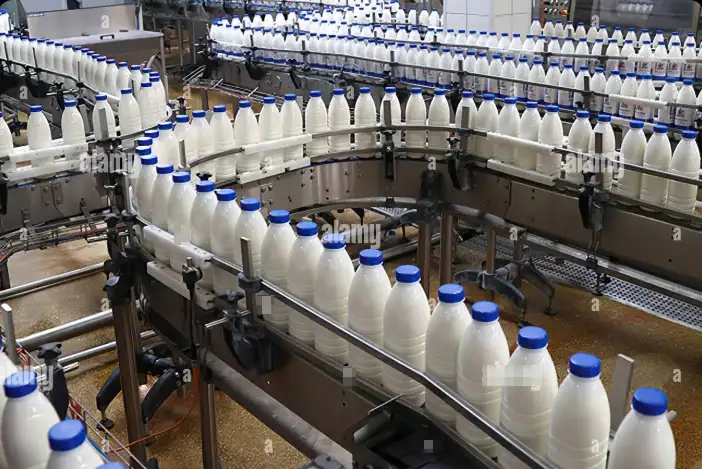
Complete Juice Production Line to Vietnam
Issacindustry
How We Shipped a Complete Juice Production Line to Vietnam — And What We Learned Along the Way
By Hubei Intop Machinery Technology Co., Ltd | Published June 2026
Every project teaches you something. But this one — a full-scale fruit juice production line shipped to a Vietnamese beverage manufacturer in Ho Chi Minh City — reminded us why getting the details right from day one matters more than anything else.
Vietnam's beverage industry has been on a tear for the past several years. Rising middle-class incomes, a younger population that actually reads ingredient labels, and an almost relentless consumer appetite for fresh, natural juice drinks. Our client there had watched this wave building and decided it was time to stop importing finished product and start making their own. They came to us with a clear ask: build us a production line that can handle mango, passion fruit, and mixed tropical blends at commercial scale, and get it running before the wet season ends.
We said yes. Here's what happened.
The Brief: More Than Just Machines
When customers approach us about a juice production line, the first thing we push back on — gently — is the idea that this is purely a machinery purchase. It isn't. What you're really buying is a process. From the moment raw fruit enters the facility to the moment a sealed bottle rolls off the conveyor, every step is interconnected. You can't optimize one piece in isolation.
Our client's facility in Vietnam was a converted warehouse, roughly 2,000 square meters. They already had water supply, drainage, and three-phase power sorted. What they needed was everything else: washing, sorting, crushing, enzyme treatment, pasteurization, filling, capping, labeling, and end-of-line packaging. A full turnkey juice processing solution, engineered to their throughput target of 3,000 bottles per hour at 500ml per unit.
That's not a small ask. But it's exactly what we do.
The Production Line: What We Supplied
1. Fruit Washing and Sorting Station
Vietnam's tropical fruit supply chain is vibrant but variable. Mangoes come in different sizes, ripeness levels, and surface conditions depending on the season and the farm. We specified a roller-type fruit washing machine with adjustable water pressure and a stainless steel sorting conveyor so operators could visually reject underripe or damaged fruit before it ever touched the processing line.
This sounds basic, but skipping it is one of the most common mistakes smaller operations make. Bad input creates bad juice — and no amount of downstream processing fixes a batch that started wrong.
2. Fruit Crushing and Pulping
For tropical fruits like mango and passion fruit, we supplied a double-channel pulper-finisher that separates juice and fine pulp from seeds, skin, and fiber. The machine runs at adjustable speed, which matters because passion fruit and mango have very different textures and require different processing parameters.
One thing our engineers insisted on: stainless steel contact surfaces throughout. In a warm, humid climate like Vietnam's, sanitation isn't something you can leave to good intentions. Every component the product touches is 304 or 316 stainless, fully drainable, with no dead zones where bacteria can hide.
3. Enzymatic Treatment and Holding Tanks
For high-pulp juices, enzyme treatment improves yield and clarity. We included jacketed holding tanks with agitators to maintain precise temperature during enzyme reaction time. This step is easy to skip when you're in a hurry; our client had learned the hard way with a previous supplier that skipping it cost them 15–20% in juice yield per batch.
We don't shortcut this. The tanks are insulated, fitted with temperature sensors, and connected to our central control system so operators see exactly what's happening in real time.
4. Pasteurization System — The Heart of the Line
If there's one piece of equipment that makes or breaks a juice production operation, it's the pasteurizer. Get it wrong and you're either cooking the flavor out of your juice (over-pasteurized) or shipping product with a shelf-life problem (under-pasteurized).
We supplied a tubular UHT pasteurizer configured for HTST (High-Temperature Short-Time) processing at 95°C for 30 seconds for the tropical juice blends. The system includes a plate heat exchanger for energy recovery — incoming cold juice pre-heats against outgoing hot juice, cutting steam consumption by around 70% compared to a basic heating system.
This matters in Vietnam because energy costs are real, and a line that's expensive to run is a line your client will eventually resent owning.
5. Deaerator and Homogenizer
Dissolved oxygen is the enemy of fresh-tasting juice. Before filling, product passes through a vacuum deaerator that strips out oxygen and prevents browning and flavor degradation during shelf life. For blended products with added pulp, a high-pressure homogenizer ensures consistent texture so every bottle looks and tastes the same.
6. Hot-Fill Bottle Filling and Capping
Our client's product line uses PET bottles at 500ml and 1,000ml. We configured a rotary hot-fill monoblock — filler and capper combined in a single hygienic enclosure — capable of 3,000–5,000 bottles per hour depending on bottle size.
Hot-fill is the right choice for natural fruit juice without preservatives. It sterilizes the bottle from the inside and creates a vacuum seal as the product cools. Combined with the UHT pasteurization upstream, this gives the client a 12-month shelf life at ambient temperature — exactly what a distributor network needs.
7. Automatic Labeling, Date Coding, and Case Packing
The downstream end of the line is often underfunded in project budgets. Customers focus on the sexy stuff — pasteurizers, fillers — and then realize too late that hand-applying labels at 3,000 bottles per hour isn't actually viable.
We specified a wraparound OPP labeling machine with vision-system label placement verification, an inkjet date coder for best-before dates and batch traceability, and a semi-automatic case packer for grouping bottles into retail-ready cartons of 12.
This gave our client a genuine end-to-end production line, not just a filling machine with a bunch of manual steps around it.
Engineering the Line for Vietnam's Conditions
Shipping machinery to Southeast Asia isn't just a logistics exercise. It's an engineering one.
Heat and humidity. Hubei's climate is temperate. Ho Chi Minh City is tropical year-round. Every electrical panel we supply for Vietnam is specified with IP55 or higher ingress protection and internal cooling or desiccant systems. Control cabinets that work fine in a factory in Wuhan can suffer condensation failures in a Vietnamese production hall if not properly specified.
Power quality. Voltage fluctuations are more common in Vietnam than in China's industrial zones. We fitted all major motors with soft-starters and surge protection, and recommended our client install a voltage stabilizer on the incoming supply. Small investment, big insurance policy.
Sanitation standards. Vietnam's food safety authority (VFA) has tightened regulations significantly since 2022. Our line was designed to comply with both Vietnamese national standards and Codex Alimentarius guidelines for juice processing — including full CIP (Clean-In-Place) circuits on all product-contact equipment.
Language and operator interface. Our HMI touch screen was delivered with a dual Vietnamese/English interface. Every alarm, every process step, every parameter is readable by the local team without needing a translator.
The Shipment: Guangzhou to Ho Chi Minh City
The equipment was manufactured at our facility in Hubei and completed final integration testing in late April 2026. Dismantled and crated for export, the shipment totaled 6 × 40HQ containers.
We chose Guangzhou Nansha Port as the loading port — direct weekly sailings to Cat Lai Port in Ho Chi Minh City, transit time approximately 5–7 days. For time-sensitive project equipment, this route beats the alternatives.
A note on crating: juice processing machinery is not forgiving of rough handling. Pasteurizer tubes can bend. Plate heat exchangers can crack. Our logistics team oversaw custom timber crating with shock-absorbing foam for all precision components, and every frame and panel was wrapped in moisture-barrier film before containerization.
All equipment shipped CIF Ho Chi Minh City with marine insurance, accompanied by full export documentation: commercial invoice, packing list, bill of lading, certificate of origin (Form E for ASEAN preferential tariff), and CE declarations for electrical equipment.
Installation and Commissioning: Three Weeks On-Site
Our team of four engineers arrived in Ho Chi Minh City two weeks after the containers cleared Vietnamese customs. Installation took 18 days. Commissioning and trial runs took another 5.
A few things stood out:
Passion fruit is tricky. The high seed content created minor blocking issues in the pulper finisher during initial trials. Our engineers adjusted the screen size and rotation speed on-site — problem solved within a day. This is why commissioning matters. No matter how good your factory testing is, real fruit behaves differently from water used in factory trials.
The operators learned fast. The local team was sharp. By day three they were running the filling line independently. By the end of week two they'd figured out how to adjust the labeling machine for their 1,000ml bottles without calling us. That's a good sign. A production line should empower the people running it, not hold them hostage to the supplier.
The CIP cycle was validated on day 20. We ran four consecutive cleaning cycles while an independent lab tested swab samples from critical contact surfaces. Results came back clear. The client's QC manager signed off. Line accepted.
Results: Six Weeks After Go-Live
We followed up with our client six weeks into full production:
- Average throughput: 2,800 BPH (93% of rated capacity — excellent for a new line)
- Downtime in first six weeks: less than 4 hours total, zero mechanical failures
- Yield improvement vs. previous contract manufacturer: ~12% more juice per ton of mango
- Shelf-life testing: 12-month ambient shelf life confirmed by independent lab
They've already started conversations with a regional supermarket chain about private-label supply. That's the outcome we wanted to hear.
Why Vietnam? Why Now?
We've shipped juice production lines to over 20 countries. Vietnam consistently stands out right now, and here's why:
Domestic consumption is growing faster than most people expect. Vietnam's FMCG sector is expanding at roughly 8–10% annually, with functional and natural beverages outpacing the overall market. Consumers in Hanoi and Ho Chi Minh City are increasingly willing to pay a premium for juice with minimal additives — exactly the product a well-run domestic manufacturer can supply better than an importer can.
Export opportunity is real. With EVFTA (the EU-Vietnam Free Trade Agreement) reducing tariffs on processed food and beverage products, Vietnamese manufacturers who can meet EU food safety standards now have a credible path to European shelves. Our CE-compliant machinery helps clients get there.
Raw material advantage. Vietnam sits in one of the most biodiverse fruit-producing regions on earth. Mango, passion fruit, dragon fruit, jackfruit, guava — all available domestically, seasonally abundant, and competitively priced. A juice manufacturer in Vietnam has raw material access that processors in Europe or the Middle East can only dream about.
What to Look for When Buying a Juice Production Line
We've talked to a lot of buyers who came to us after bad experiences elsewhere. Here's what we see repeatedly:
Price that seems too good. A juice production line at 3,000 BPH should not cost $80,000 all-in. If someone is quoting you that, ask what they've left out. Usually it's the pasteurizer quality, the CIP system, the control system, or after-sales support. Sometimes all four.
No commissioning support. Some suppliers ship machines and disappear. Commissioning is not optional for a new production line. Insist on it. Put it in the contract with defined acceptance criteria — yield, throughput, hygiene test results.
Equipment that doesn't match the product. Passion fruit is different from apple juice is different from NFC orange. Make sure your supplier has actually run trials or supplied lines for your specific product. Ask for references.
No spare parts supply. Once your machine is running, the thing you need most is wear parts — seals, screens, pump impellers, filling valves. Ask your supplier upfront what their spare parts lead time is and whether they hold stock in your region.
About Hubei Intop Machinery Technology Co., Ltd
We design and manufacture dairy and beverage processing lines from our facility in An Lu, Hubei Province, China. Our engineering team has executed projects across Southeast Asia, the Middle East, Africa, and Central Asia.
We don't sell boxes. We sell running production lines — from process design and equipment manufacturing through installation, commissioning, operator training, and ongoing technical support.
If you're evaluating a juice, dairy, or beverage project and want to talk through what the right line looks like for your product, throughput, and budget — reach out. The first conversation is always free.
WhatsApp: +86 173 2484 3142
Email: [email protected]
Website: www.intopmachinery.com
Hubei Intop Machinery Technology Co., Ltd — An Lu, Hubei, China
Related reading:
- Dairy Pasteurization Equipment: What Every Buyer Should Know Before They Sign
- Turnkey vs. Semi-Turnkey: Which Approach Is Right for Your Beverage Project?
- Tropical Fruit Juice Processing: How Enzyme Treatment Changes Everything