Dairy Production Line Configuration: How to Select the Right 500L Cooling Tank Without Overpaying
Issacindustry
<!DOCTYPE html>
Dairy Production Line Configuration: How to Select the Right 500L Cooling Tank Without Overpaying
A properly configured dairy production line is the difference between a plant that runs smoothly and one that bleeds money in rework and downtime. At the center of any medium-scale dairy operation sits the cooling tank — and in emerging markets, the 500L cooling tank has become the de facto standard for farmers and mid-size processors alike.
This guide breaks down exactly how to configure a dairy production line around a 500L cooling tank, what mistakes most buyers make, and how to avoid paying European brand premiums without sacrificing quality.
Why 500L Cooling Tank Is the Sweet Spot for Emerging Dairy Markets
The 500L cooling tank sits in a strategic middle ground. It's large enough to handle batch cooling for a small-to-medium dairy operation — roughly 300–500 liters of raw milk per cycle — yet compact enough to fit into facilities with limited infrastructure or budget constraints.
For processors in Africa, Southeast Asia, and Central America, the 500L capacity matches typical farm-gate collection volumes. One 500L tank can receive milk from multiple smallholder farms, cool it to 4°C within 2 hours, and hold it without bacterial growth for up to 24 hours before pasteurization.
Choosing a tank that's too large leads to energy waste and milk aging. Choosing one that's too small creates bottlenecks during peak collection hours. The 500L tank eliminates both problems for operations processing 500–2,000 liters per day.
500L Cooling Tank vs. Smaller Capacities: Configuration Comparison
| Tank Capacity | Best For | Cooling Time | Energy Use |
|---|---|---|---|
| 200L | Micro-dairy, farm stall | 1.5 hours | Low |
| 500L | Small processor, cooperative | 2 hours | Moderate |
| 1000L | Mid-size plant | 3 hours | High |
| 2000L+ | Industrial scale | 4+ hours | Very High |
Core Equipment Modules in a Dairy Production Line Configuration
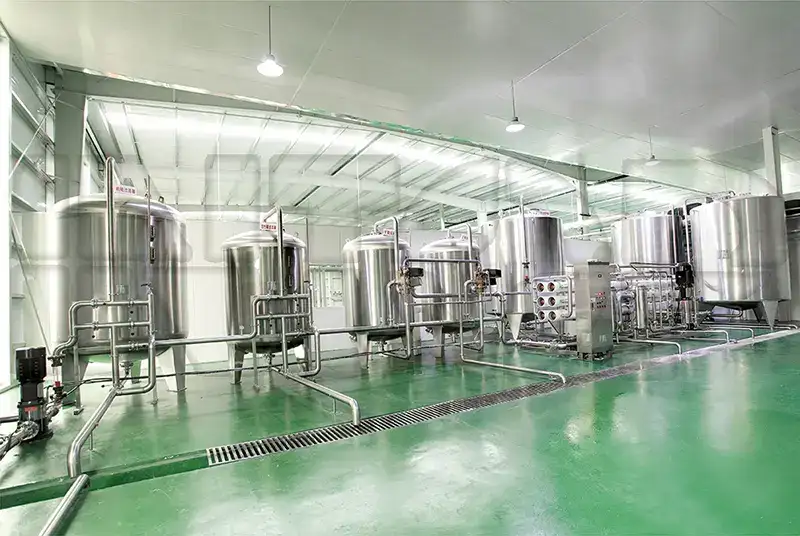
A complete dairy plant equipment layout isn't a single machine — it's a system of interconnected modules. Each module must be sized and specified to work with the others. Here's the standard configuration hierarchy:
1. Raw Milk Reception & Filtration
Every milk processing line setup begins at reception. Raw milk arrives at 35–38°C — the danger zone where bacteria multiply. The reception module includes: balance tanks, manual or automatic filtration systems, and flow meters for quantity tracking. Configuration tip: specify a dual-filter system for raw milk with high sediment content, common in smallholder collection scenarios.
2. Raw Milk Storage & Cooling
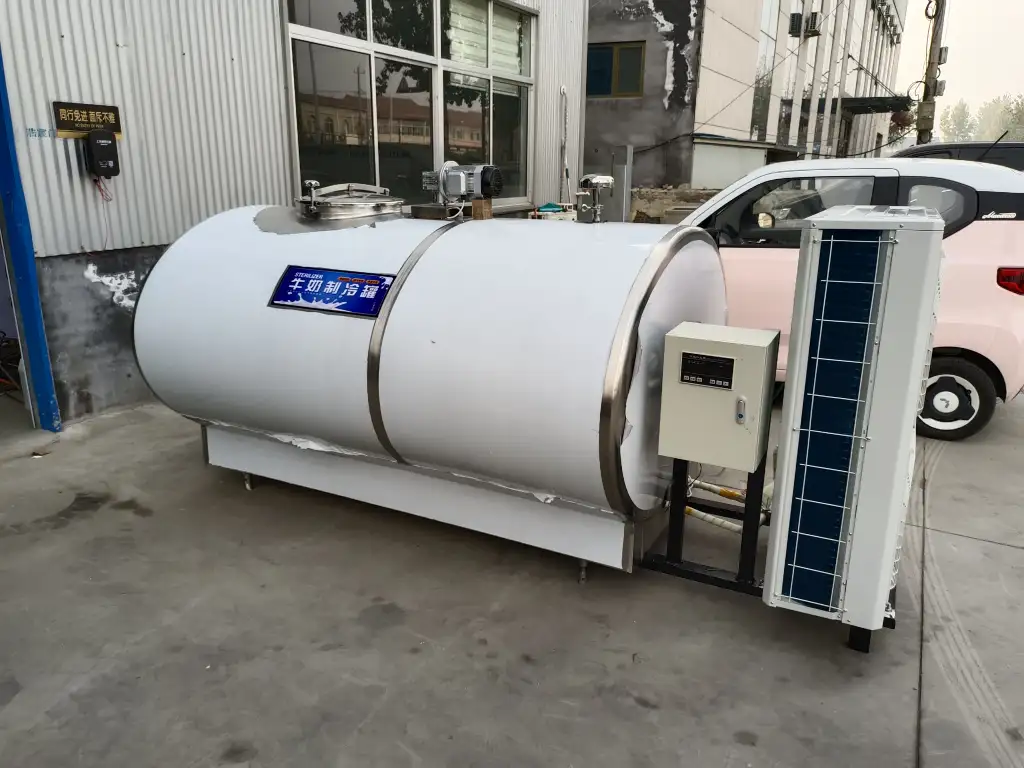
This is where the 500L cooling tank lives. The tank must be: insulated (PU foam, minimum 50mm thickness), refrigerated (compressor-driven, COP ≥ 1.8), and equipped with an agitation system (slow-speed, 20–30 RPM) to prevent cream separation. Direct expansion (DX) cooling is preferred over glycol-loop systems for 500L tanks — simpler, cheaper to maintain, and faster pull-down times.
3. Heat Treatment — Pasteurization or UHT
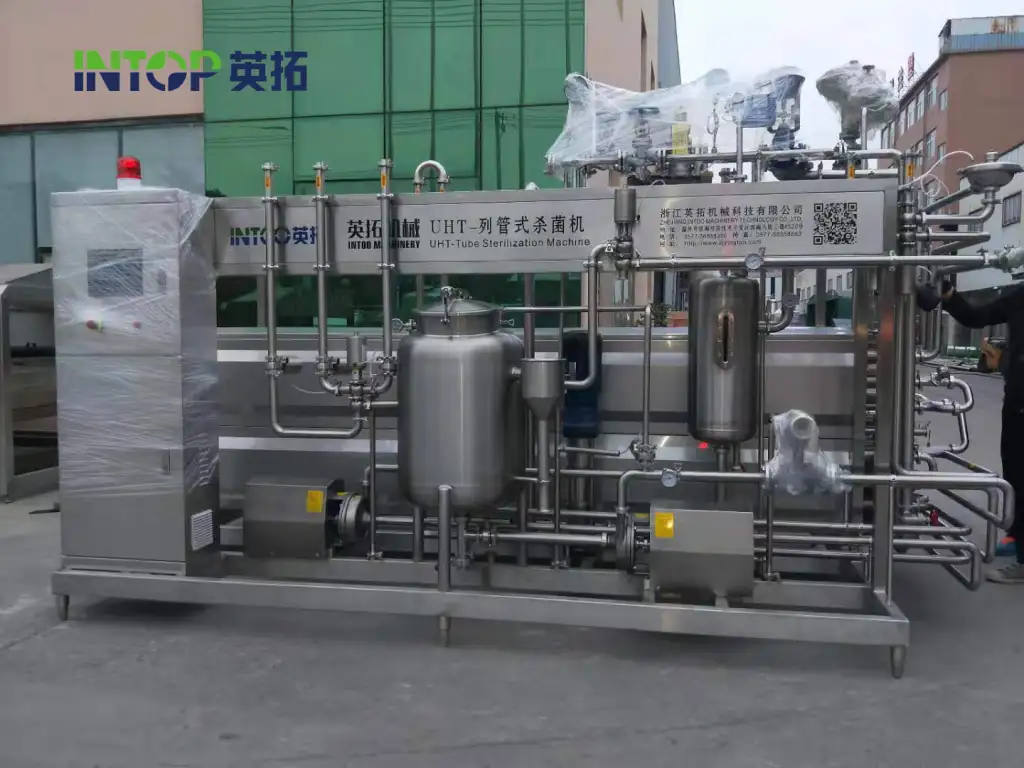
For markets targeting extended shelf life (ESL), a UHT milk processing system operates at 135–150°C for 2–4 seconds. For fresh milk supply chains, HTST (High-Temperature Short Time) pasteurization at 72°C for 15 seconds is the standard. Configuration decision: UHT requires more capital but enables distribution without cold chain. HTST is lower cost but demands robust cold logistics.
4. Filling and Sealing
The filling and sealing machine is where your line speed matters most. For 500L batch operations, semi-automatic fillers (200–400 bottles/hour) are cost-appropriate. Configure for your bottle sizes — 500mL, 1L, and 2L are the most common retail formats in emerging markets. Rotary fillers offer higher speed but require larger scale to justify the investment.
5. Cold Chain Storage
After filling, finished product must reach 4°C within 2 hours and maintain that temperature through distribution. Your dairy plant equipment layout must account for cold rooms sized at 1.5–2x your daily production capacity to handle batch accumulation during low-traffic periods.
Step-by-Step: Designing Your Dairy Production Line Layout
Follow this sequence when configuring a turnkey dairy production line:
Step 1: Define Daily Volume Target
Start with your end goal — not your budget. If you want to process 1,000 liters per day, work backward: filling speed → pasteurization capacity → cooling tank sizing. A single 500L cooling tank can handle this volume if you're doing two batches per day, but you'll need a 1,000L buffer tank upstream to manage collection timing.
Step 2: Map the Production Flow
Use a U-shaped or straight-through layout depending on your building footprint. Straight-through is preferred for new greenfield plants — it minimizes material handling and reduces the risk of cross-contamination between raw milk reception and finished product storage. The golden rule: raw milk never crosses paths with pasteurized product.
Step 3: Specify Interconnection Pipes and Pumps
Many buyers focus on the major equipment and overlook the transfer system. Specify: food-grade stainless steel 304 pipes (minimum 2-inch diameter for milk transfer), centrifugal pumps sized for 5,000 L/hr flow, and ball valves at every connection point. Under-specified pipes create bottlenecks that cripple line speed.
Step 4: Plan Utility Requirements
A 500L cooling tank + pasteurizer + filler combination typically requires: 3-phase electricity (380V/50Hz or 440V/60Hz depending on market), 2,000–3,000 liters of clean water per day for CIP (Clean-in-Place), and adequate refrigeration capacity (minimum 10kW compressor output for a 500L tank in ambient temperatures up to 35°C).
Capacity Planning: Matching Equipment to Production Volume
The most common configuration mistake: buying a 500L cooling tank and pairing it with a pasteurizer rated for 1,000L. The result is inefficient batch management — you're either waiting for the pasteurizer or overloading the cooling tank.
Match your equipment capacities in ratios:
- Cooling tank : Pasteurizer: 1 : 1 or 2 : 1 (two cooling tanks feeding one pasteurizer is common for 500L lines)
- Pasteurizer : Filler: 1.2 : 1 (pasteurizer output should exceed filler speed by 20% to absorb changeover losses)
- Cooling tank fill : Cool-down time: 2 hours maximum from milk receipt to 4°C
For a 500L/day operation, a single 500L cooling tank with a 500L/hr pasteurizer and semi-automatic filler is a balanced configuration that avoids over-investment while maintaining quality standards.
Compliance and Sanitation Standards for Dairy Processing Facilities
Any serious dairy manufacturing equipment guide must address sanitation. Equipment configuration is only as good as your CIP system. Every dairy production line needs:
- CIP circulation system with alkali and acid cleaning stages (minimum 30-minute cycle per stage)
- SS304 or SS316L material contact surfaces for all pipes, tanks, and fittings
- Temperature data loggers on all cooling and heat treatment stages (food safety audit requirement in most export markets)
- SS mesh filters at raw milk reception to remove particulate before cooling
For buyers targeting export markets or major retail supply contracts, equipment should be CE certified or equivalent. Chinese manufacturers with export experience — like those supplying GEA and Tetra Pak sub-lines — typically offer CE-compliant configurations at 40–60% lower price points than OEM brands.
FAQ: Dairy Production Line Configuration & 500L Cooling Tank Selection
Q: Can I run a dairy production line with just one 500L cooling tank?
A: Yes, for operations up to 500 liters per day. Above that volume, a single tank creates collection bottlenecks during peak milk arrival hours. Two 500L tanks in parallel is the practical upgrade path.
Q: How long does it take to cool 500L of raw milk from 35°C to 4°C?
A: A properly sized 500L cooling tank with direct expansion refrigeration typically achieves this in 1.5–2 hours, depending on ambient temperature and compressor efficiency. Insufficient insulation can extend this to 3+ hours — a quality risk.
Q: What maintenance does a 500L cooling tank require?
A: Monthly CIP cleaning, quarterly inspection of compressor performance and refrigerant levels, and annual calibration of temperature sensors. The agitation motor and seals should be checked every 6 months.
Q: Is a 500L cooling tank suitable for UHT milk processing?
A: The cooling tank itself is for raw milk storage pre-pasteurization, not for UHT processing. For UHT lines, you still need a cooling tank for raw milk — but you'll also need a UHT sterilizer, aseptic filler, and nitrogen-flush packaging system downstream.
Q: How do I verify dairy plant equipment layout compliance before purchase?
A: Request a Process Flow Diagram (PFD) and Piping and Instrumentation Diagram (P&ID) from your supplier before signing a purchase order. Review these against your target market's food safety regulations — FDA, EU Regulations 852/2004, or local standards as applicable.
Get a Custom Dairy Production Line Configuration for Your Project
Whether you're setting up a 500L micro-dairy or planning a multi-tank turnkey facility, ISSAC INDUSTRY engineers can provide a complete process layout, equipment specification, and production cost estimate tailored to your raw milk supply and target market.
Share your daily volume target, available footprint, and intended product range — and receive a complete dairy production line configuration proposal within 48 hours.
Request your free dairy line configuration proposal →
500L Cooling Tank Products | Pasteurization Equipment | Filling and Sealing Machine