How to Configure a Dairy Production Line: Complete 2026 Guide
Issacindustry
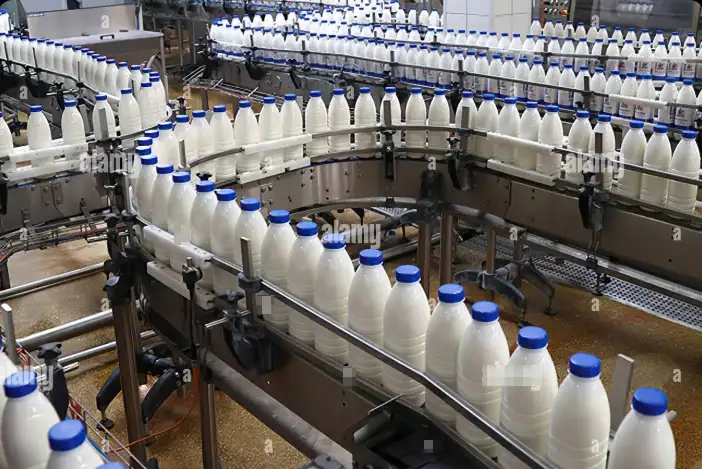
How to Configure a Dairy Production Line: Complete 2026 Guide
Most buyers spend 3–6 months evaluating dairy equipment vendors. They spend almost no time on the one thing that will determine their operating costs for the next 15 years: how the line is configured. Equipment can be replaced. A production line layout that creates cross-contamination risks, bottlenecks at peak capacity, or requires expensive product changeovers every time you switch formats—that stays with you.
This guide covers how to configure a dairy production line in 2026. Not just which equipment to buy, but how the pieces fit together, how to size each unit against your actual market demand, and how to avoid the configuration mistakes that turn capital investments into operational liabilities.
What Is a Dairy Production Line?
A dairy production line is an integrated sequence of processing equipment that transforms raw milk into finished dairy products—pasteurized milk, UHT milk, yogurt, cheese, or奶油. Every line shares the same upstream stages: milk reception, filtration, separation, standardization, homogenization, and heat treatment. What changes is everything downstream of pasteurization, depending on your target product.
Configuration matters more than any individual machine in the line. A perfectly selected homogenizer connected to an undersized plate heat exchanger becomes a bottleneck. A high-capacity pasteurizer fed by an under-sized milk pump creates quality inconsistency. The chain breaks at its weakest link—and in dairy processing, the weak links are almost always in how pieces were sized relative to each other, not in the quality of any single piece of equipment.
Core Equipment List: What Every Dairy Line Needs
Before sizing or selecting anything, you need the full equipment list mapped to your process. Here is what a complete dairy production line includes, in operational sequence:
1. Milk Reception Station
Every line starts here. Raw milk arrives at 2–4°C and must be quickly transferred to storage silos. The reception station includes a balance tank, a plate heat exchanger for pre-cooling, an inline milk pump, and a filtration unit. A properly designed reception station reduces bacterial load before the milk enters processing. Skip or undersize this step and you are fighting spoilage organisms from day one.
2. Raw Milk Storage Silo
Storage silos bridge the gap between raw milk arrivals (typically once or twice daily) and continuous processing. Silo capacity should cover 12–24 hours of processing at designed throughput. For a 20,000 L/day plant, a 15,000–20,000 L insulated silo is typical. For larger operations, multiple silos enable raw milk pooling for consistent composition.
3. Separation and Standardization Unit
Whole milk enters a centrifugal separator operating at 8,000–10,000 RPM, splitting it into skim milk and cream. Standardization follows—adjusting fat content to match your product specification (3.2% for full-fat milk, 1.5% for semi-skimmed). Modern separators can process 10,000–60,000 L/hr. Sizing tip: separate units should be rated at 120% of your peak hourly processing rate.
4. Homogenizer
Unhomogenized milk separates within hours—cream rises to the top. A homogenizer pushes milk through a fine valve at 150–250 bar, reducing fat globule size from 4–5 microns to under 1 micron. This creates a stable emulsion and directly affects shelf life, mouthfeel, and product appearance. For UHT milk, skipping homogenization is not an option—it is a critical quality parameter.
5. Heat Treatment System: Pasteurizer or UHT Processor
This is your most critical process decision and the largest single equipment cost in most configurations.
Pasteurization (72–85°C for 15–20 seconds):
- Extends refrigerated shelf life to 7–14 days
- Preserves fresh milk flavor
- Requires continuous cold chain distribution
- Lower capital cost, higher distribution cost per unit per km
UHT Processing (137–145°C for 3–5 seconds):
- Extends shelf life to 6–9 months at ambient temperature
- Destroys all vegetative microorganisms and spores
- Enables export to distant markets without cold chain dependency
- Requires aseptic packaging—typically $0.03–0.08 per liter in material cost alone
For export-oriented plants, UHT is effectively mandatory. For domestic fresh milk in markets with reliable refrigeration, pasteurization is the rational choice.
6. Fermentation and Culturing System (Yogurt and Cultured Dairy)
If your configuration includes yogurt, kefir, or other fermented products, you need culture preparation tanks and fermentation tanks with precise temperature control (40–45°C). Fermentation time ranges from 4–12 hours depending on culture and product style. Configure at least two fermentation tanks per line to enable staggered production batches.
7. Cooling and Aging Tanks
Post-pasteurization or post-fermentation cooling must bring product temperature to 4°C within 30 minutes. Insulated cooling tanks with glycol-jacket cooling are standard. For yogurt, aging tanks hold the product at 4°C for 4–12 hours post-fermentation to develop texture.
8. Filling and Packaging Machine
The filling machine determines your effective line speed. A standard rotary milk carton filler runs 6,000–12,000 units per hour. Aseptic filling lines for UHT milk operate at similar speeds but require significantly more floor space, higher capital investment, and more complex CIP systems. Cup fillers for yogurt, bottle fillers for UHT—the format must match your product and target retail channel.
9. CIP (Clean-In-Place) System
Dairy lines must be fully cleaned and sanitized between production batches. A CIP system circulates detergent solution, rinse water, and sanitizer through all process vessels and pipes. Configure CIP to match your product changeover frequency: daily product switching requires faster CIP turnaround (typically 2–3 hours per cycle) than weekly changeovers.
10. Quality Control Laboratory
Inline sensors measure temperature, pH, and fat content continuously. But you also need offline testing capability: microbiological cultures, alcohol stability tests, protein analysis, and sediment testing. A basic quality control lab for a dairy line costs $5,000–$20,000 in equipment and should be designed into the factory layout from the start, not added as an afterthought.
Capacity Planning: How to Size a Dairy Line Without Overpaying
Sizing a dairy line correctly is the highest-leverage configuration decision. Oversize it and you pay for capacity you never use—the equipment still costs more to maintain and the energy cost per liter is higher when running at low utilization. Undersize it and you lose sales during peak demand periods, or worse, you run the equipment beyond design throughput and compromise product quality.
Here is a practical sizing framework:
Small-Scale Plant: 2,000–5,000 L/day
- Single-stream equipment is sufficient
- Batch processing is acceptable for yogurt production
- Manual CIP is viable; semi-automatic CIP is better
- Typical equipment investment: USD 150,000–400,000
- Best for: regional distributors, local retail, hospitality sector
Medium-Scale Plant: 10,000–30,000 L/day
- Continuous processing line required
- Semi-automatic to fully automatic CIP systems
- Central control system with PLC or SCADA integration
- Typical equipment investment: USD 400,000–1,200,000
- Best for: national retail supply, food service volume buyers
Large-Scale Plant: 50,000–200,000+ L/day
- Fully automatic line with centralized control room
- Multiple parallel process trains for redundancy
- On-site utility generation (steam boilers, compressed air, water treatment)
- Typical equipment investment: USD 1,500,000–5,000,000+
- Best for: export-oriented plants, major retail chains, multinational food companies
The most common sizing mistake: buying equipment rated for higher capacity than the realistic 3-year production target, then running it at 40% load. This is expensive in three ways—equipment purchase price is higher, energy cost per liter is higher, and wear accelerates when equipment sits idle or operates below design RPM ranges. Size equipment to approximately 120% of your realistic 3-year target, not your aspirational 5-year target.
2026 Cost Estimate: What Dairy Line Configuration Costs
Prices vary significantly by equipment origin, automation level, and whether you buy individual machines or a turnkey package. Here is what you should budget for:
| Equipment | Function | Typical Price Range (USD) |
|---|---|---|
| Milk reception station | Raw milk intake, pre-cooling, filtration | $25,000 – $80,000 |
| Raw milk storage silo | 12–24 hr storage buffer | $15,000 – $50,000 |
| Separator + standardizer | Fat separation and adjustment | $40,000 – $120,000 |
| Homogenizer | Fat globule size reduction | $30,000 – $90,000 |
| Pasteurizer (HTST) | Heat treatment 72–85°C | $60,000 – $150,000 |
| UHT processor | Aseptic heat treatment 137–145°C | $80,000 – $300,000 |
| Fermentation tanks | Yogurt/culture production (per tank) | $20,000 – $60,000 per tank |
| Cooling and aging tanks | Post-process cooling and texture development | $15,000 – $50,000 |
| Filling machine | Carton/cup/bottle filling and sealing | $100,000 – $500,000 |
| CIP system | Clean-in-place sanitation | $30,000 – $80,000 |
| Quality control lab | Microbiological and compositional testing | $5,000 – $20,000 |
| Utilities + installation | Piping, electrical, instrumentation | Typically 15–25% of equipment cost |
Chinese vs. European Equipment: What the Price Gap Means
Chinese-manufactured dairy equipment typically costs 30–50% less than European equivalents for equivalent specifications. For a complete 20,000 L/day turnkey dairy line, Chinese suppliers quote USD 600,000–1,000,000; European turnkey lines typically run USD 1,200,000–2,500,000 for comparable throughput.
The real trade-off is not quality alone—it is software, documentation, and post-sales support depth. European manufacturers typically provide: more detailed process documentation, EU-compliant CE certification, on-site commissioning engineers for longer periods, and more established distributor networks for spare parts. Chinese manufacturers have closed this gap significantly in the past five years, but the variation between individual Chinese suppliers is much larger. Vet Chinese suppliers carefully: request plant visit reports, ask for references from plants running the same equipment for 3+ years, and verify food safety certifications independently.
How to Choose a Dairy Equipment Supplier in 2026
Price matters. Service matters more. A line that stops production for two weeks every month costs more than a premium line that runs at 98% uptime over five years. Ask every supplier these six questions before signing anything:
- Can you provide references from plants running the same configuration for 3+ years? A reference from a newly commissioned plant tells you nothing about long-term reliability. You want references from plants that have been running your intended configuration for at least three years under real production conditions.
- What is your CIP protocol, and does it meet EU/FDA standards? Clean-In-Place procedures must be documented and validated. If a supplier cannot explain their CIP validation methodology, their process design is incomplete.
- Do you offer remote diagnostic support? The best suppliers offer VPN-connected PLC monitoring that allows their engineers to troubleshoot faults remotely, often resolving issues within hours rather than days. This is increasingly standard—do not accept a supplier who requires an on-site visit for every fault.
- What are your spare parts lead times? For critical wear parts (homogenizer valves, seals, plates), ask for the specific part numbers and typical delivery times. A supplier who stocks common parts locally versus one who ships everything from their factory abroad can save you weeks of downtime.
- Do you provide P&ID drawings and operator training materials? Process flow diagrams, piping and instrumentation drawings, and written operator training curricula are standard deliverables for serious suppliers. Missing documentation is a red flag for process engineering quality.
- What is your on-site commissioning scope? Some suppliers send an engineer for one week; others stay until the line passes performance acceptance tests. Get the definition of performance acceptance tests in writing before signing.
Configuration Mistakes to Avoid
Five mistakes account for the majority of dairy line configuration failures:
1. Not designing for product flexibility from the start.
A line configured only for UHT milk cannot produce酸奶 without significant modification. If your business plan includes adding yogurt to your portfolio within three years, specify this upfront. The incremental cost of configuring fermentation tanks and compatible filling equipment at the initial build stage is far lower than modifying an existing line later.
2. Underestimating utility requirements.
A 30,000 L/day dairy plant requires approximately 300–500 kW of electrical power, 5–10 tons of steam per hour, 20–40 m³ of purified water per day, and compressed air at 6–8 bar. Site utility capacity is frequently the constraint that delays commissioning by 3–6 months. Commission a utility capacity study before finalizing your line configuration.
3. Ignoring aseptic packaging cost in UHT lines.
UHT milk requires aseptic packaging—typically $0.03–0.08 per liter in packaging material cost alone. Over a 10-year operating horizon, packaging cost often exceeds the initial equipment cost. Factor this into your unit economics before sizing the line.
4. Skipping pilot testing with your actual formulations.
Before committing to full-scale production, run your target formulations through a pilot-scale system. This validates process parameters, identifies formulation issues, and gives your operators hands-on experience before the real production line is commissioned. Many buyers skip this step and discover formulation problems only during full-scale commissioning—costly and embarrassing.
5. Buying individual machines instead of a coordinated package.
When you buy individual machines from different suppliers, you own the integration problem. Pipework, valve sizing, pump curves, and CIP circuit design all need to work together. A turnkey line from a single supplier who has engineered the interfaces means one party owns the performance. When three different suppliers each delivered equipment that technically meets spec but the system does not work together—you own that problem too.
Project Timeline: From Configuration to First Production
A typical turnkey dairy plant project follows this timeline:
- Month 1–2: Site selection, feasibility study, supplier evaluation, configuration finalization
- Month 3–4: Contract signing, detailed engineering, civil work permits
- Month 5–8: Equipment manufacturing (Chinese suppliers: 4–8 months; European suppliers: 6–12 months)
- Month 9–10: Site preparation, civil works, utility installation
- Month 11–12: Equipment installation, CIP commissioning, trial production runs
- Month 13: First commercial batch, full operational handover
Chinese-manufactured turnkey lines typically compress total project timeline to 8–10 months from contract to first production. European projects commonly extend to 14–18 months. Build this timeline into your business plan—delays in dairy plant commissioning are expensive and often trigger working capital crises.
FAQ: Dairy Production Line Configuration
Q: What capacity dairy line is minimum economically viable?
For most markets, minimum economical capacity is 5,000 L/day for pasteurized milk or 10,000 L/day for UHT milk. Below this threshold, per-liter overhead—labor, utilities, maintenance—makes profitability very difficult to achieve at competitive price points.
Q: Can one dairy line produce multiple products?
Yes, with flexible configuration. A line with separate fermentation tanks, interchangeable filling formats, and a programmable CIP system can produce pasteurized milk on some days and yogurt on others. However, product changeovers require a full CIP cycle (2–4 hours), so daily product switching is typically impractical. Configure for your primary product and treat product flexibility as an occasional capability, not a daily feature.
Q: What certifications do I need for dairy export to the EU?
Equipment must carry CE marking. Your plant needs ISO 22000 food safety certification or FSSC 22000, EU-compliant HACCP documentation, and traceability systems that meet EU food law requirements. Engage a recognized certification body (SGS, Bureau Veritas, TÜV) from the project start—retrofitting compliance systems is expensive.
Q: How long does a dairy production line last?
With proper maintenance, a well-built dairy line has a 15–20 year operational life. Wear parts—seals, homogenizer valve heads, heat exchanger plates, gaskets—require replacement every 2–5 years. Control systems and electronics typically need modernization every 10–12 years. Budget for these lifecycle costs in your operating model from the start.
Q: Should I buy a used dairy line?
Only if you have complete inspection records, the line was idle for less than 12 months, and you can budget 20–30% of the purchase price for reinstallation, replacement parts, and debugging. Dairy lines are difficult to transport and reinstall—hidden wear issues discovered after installation can eliminate any purchase price advantage quickly.
Q: What is the difference between a pasteurized milk line and a UHT milk line?
The core difference is the heat treatment temperature and duration. Pasteurization uses lower temperatures and destroys only vegetative bacteria; UHT uses much higher temperatures and destroys spores as well. UHT also requires aseptic filling and packaging, which adds significant cost. If your market is within a 7-day refrigerated distribution radius, pasteurization is sufficient. If you need shelf-stable product for export or distant domestic markets, UHT is required.
Ready to Configure Your Dairy Production Line?
Configuration is where dairy plant projects succeed or fail. The decisions you make in the next 4–8 weeks will determine your production efficiency, product quality consistency, and operating cost structure for the next 15 years. Do not leave them to equipment vendors who benefit from selling you the most expensive option.
ISSAC INDUSTRY provides turnkey dairy line solutions with transparent configuration engineering, competitive pricing against both Chinese and European alternatives, and on-site commissioning support. Tell us your target capacity, product mix, and market destination—we will send a preliminary configuration and budget estimate within 48 hours.
Get a free dairy line configuration quote → Contact us with your production target and product requirements for a detailed equipment proposal tailored to your investment parameters.
Internal link: Dairy Production Line Equipment | UHT Milk Processing Equipment | Homogenizer Series